Caffeine At 270 mg A Serving: What That Means For You
Two thirds of the FDA's daily figure in one swallow. What it means for sleep, for your coffee habit and for who should not take it at all.
Burn XT Official Website › Journal
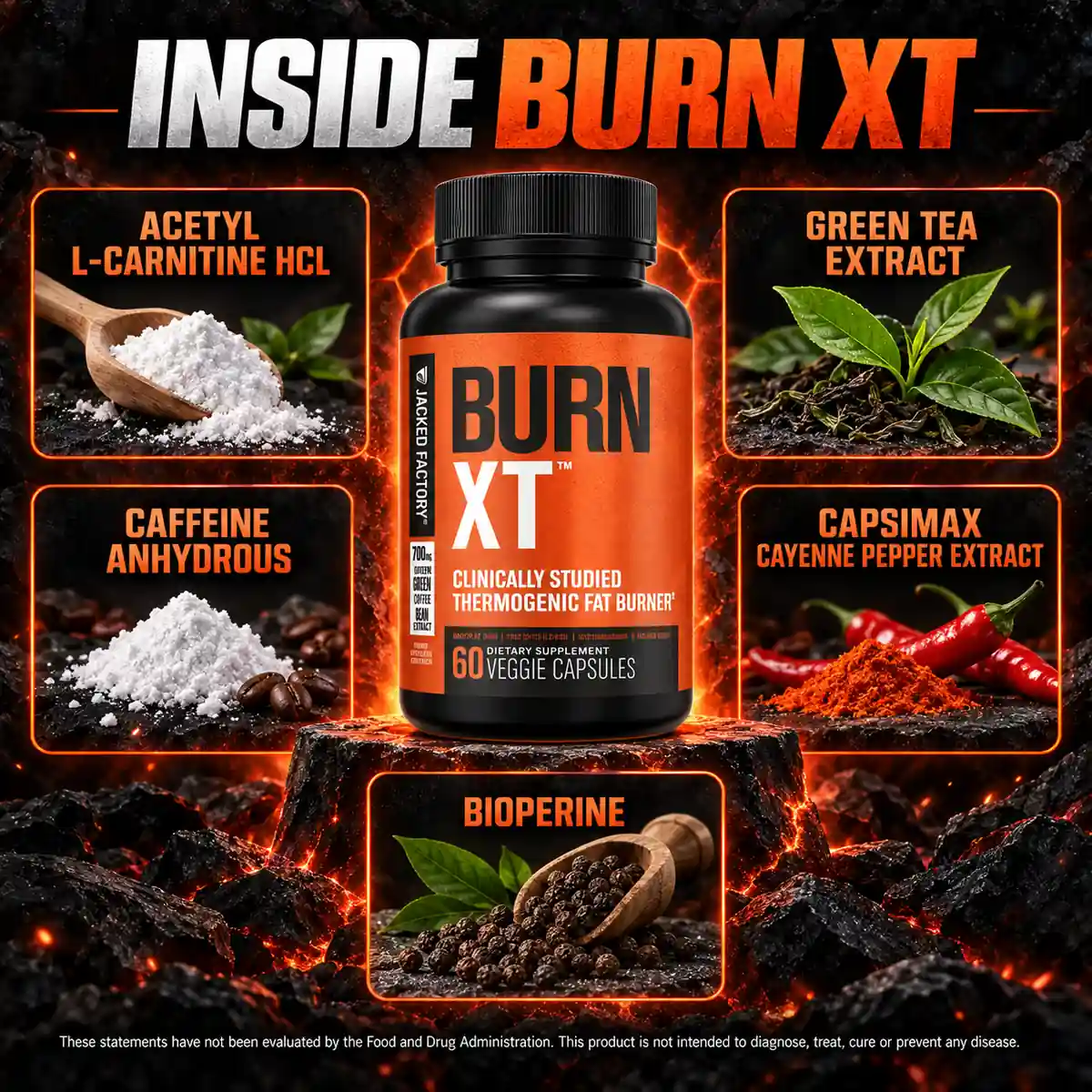
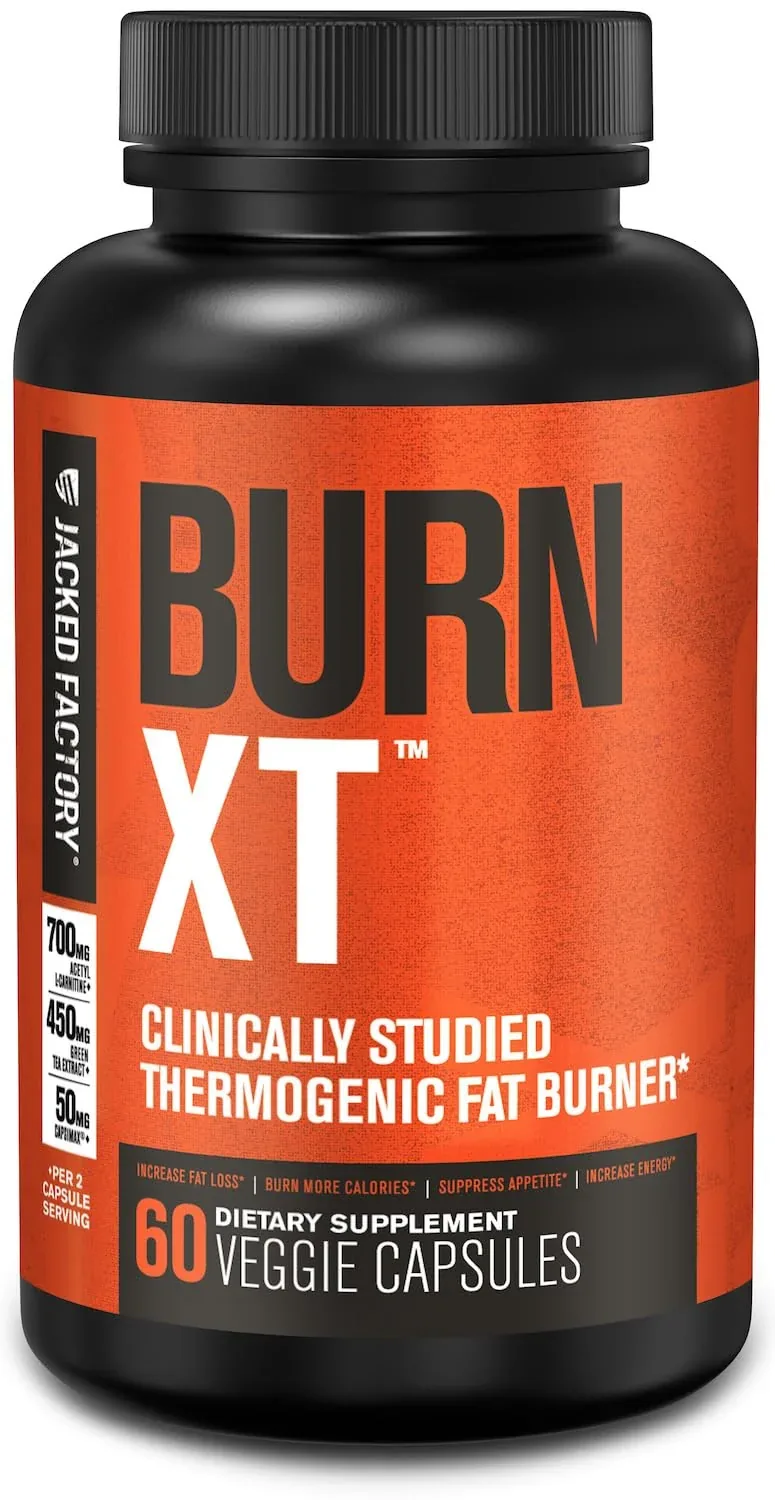
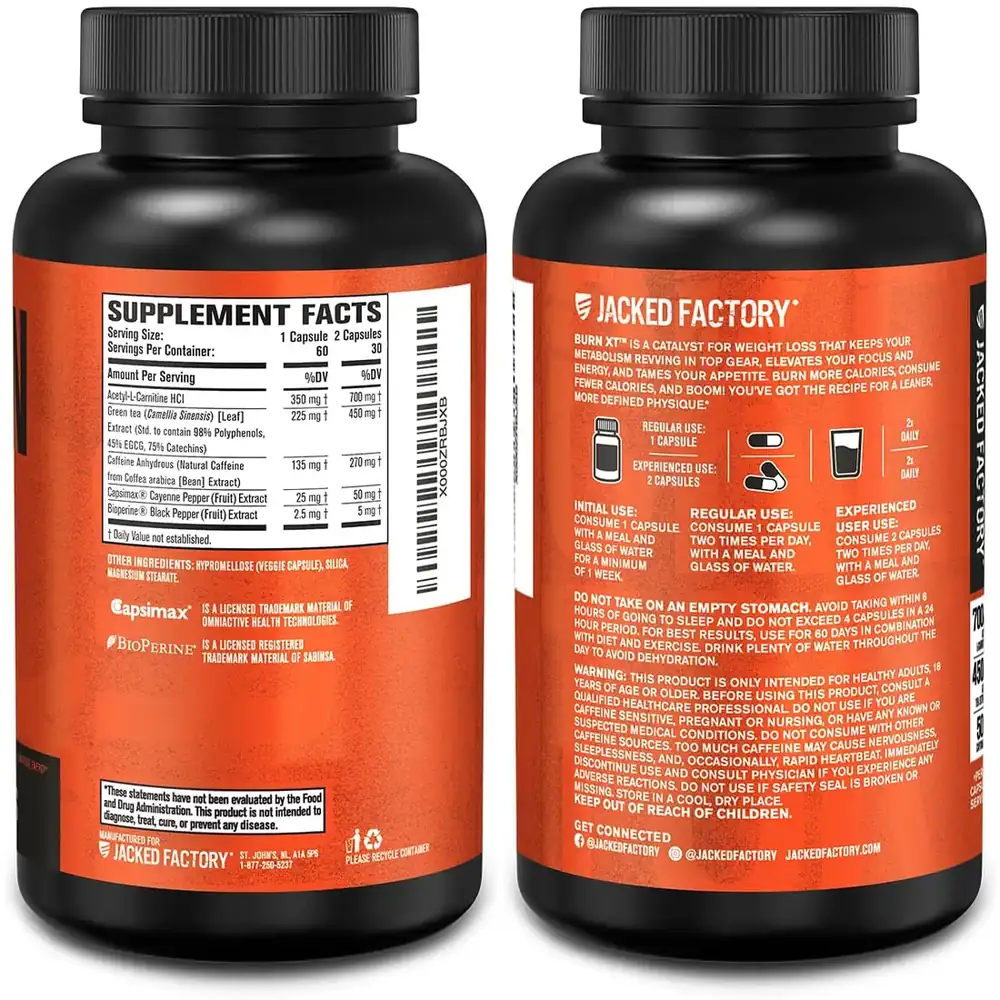
Five long articles on the things a product page cannot cover properly: what 270 mg of caffeine a serving actually means, the green tea extract liver evidence, acetyl L-carnitine against the amounts its trials used, why buyers report three to six weeks, and how to read a two-column Supplement Facts panel.
Two of the five cost this product something. Those are the two to read first.
Each one runs to about 1,700 words, carries its own sources, and links the studies in the sentences that use them.
Two thirds of the FDA's daily figure in one swallow. What it means for sleep, for your coffee habit and for who should not take it at all.
A rare but documented signal, a USP expert panel review, and one instruction on the back label that turns out to be the whole mitigation.
The best-studied ingredient on the label, at the amount furthest below its research range. A meta-analysis of 37 trials, read honestly.
Two clocks in one capsule, what the desk's own review dates show, and which pack that actually makes sensible.
An accurate number in a misleading frame. Five checks that tell you almost everything a label can.
A retail desk publishing long articles about the product it sells has an obvious problem, and the only useful answer to it is to publish the articles that cost something.
Two of the five do. The caffeine article works out that a full serving is two thirds of the Food and Drug Administration's general daily figure before you drink anything, and sets out who should not be taking it at all. The green tea extract article sets out a documented liver signal and a United States Pharmacopeia review that recommended a caution statement this label does not carry.
The carnitine article is the ingredient deep-dive, and it lands on the amount this panel prints being a quarter to a half of what the trials used. The timeline article explains why buyers wait three to six weeks and recommends the pack this desk earns less from. The label-reading article is the one that is useful whether or not you ever buy anything here.
None of them is a review, none of them contains a testimonial, and each one links its sources in the sentence rather than piling them at the foot of the page.
| If this interested you | Read next |
|---|---|
| The caffeine article | Side effects and safety, and who it is for |
| The green tea extract article | The ingredients page, and how to take it |
| The carnitine article | The dose comparison table |
| The timeline article | Reviews, and the pack ladder |
| The label-reading article | The printed panel, and the nine-point checklist |
The guides at guides are the other half of this: a category guide and a checklist, neither of which carries a product name in a subheading.
Four rules, and each one of them is checkable from the posts themselves rather than from this paragraph.
Every identifier is verified before it is published. Each PubMed identifier cited anywhere on this website was confirmed against the eutils summary API, which returns the title, journal, year and first author for a given identifier. That check is not ceremonial. During this build a plausible-looking NCBI Bookshelf identifier for a liver-toxicity monograph resolved to the entry for an unrelated sleep medicine, and it was dropped rather than published. A fabricated citation is worse than none, because it is checkable and it fails.
Government and publisher pages are opened, not fetched. Several of the domains cited here refuse an automated client with a status code indistinguishable from a dead link. Every external page linked from this journal was seen rendering its own title in a browser before the link was written down.
The amount goes beside the study. A citation with no dose attached is decoration. Where a post names a trial, it names what that trial used, and where the product's own panel prints something different, the post prints both numbers rather than the flattering one.
Nothing is estimated. Where a figure is not published to this desk, the post says so. That applies to the Capsimax capsaicinoid fraction, to pack prices, and to international shipping rates, all three of which would be easier to guess than to leave blank.
This desk publishes what the printed panel says and marks the gaps. The four claims below are the ones a sceptical reader can audit, which is the only reason to make them:
We earn when you buy. Burnxts is the authorized United States retail desk for this product and this website makes money on orders placed through it. That is exactly why the caffeine figure is in the hero, why the research-dose table is on the ingredients page, and why the three-star reviews are published at the same size as the five-star ones. They are where our interest and yours pull apart, and you should be able to watch us choose.
Every post carries the same byline, a visible last-updated date matching the one in its structured data, its own table of contents, and a source list containing only the studies that post actually cites.

Every page, every journal post, the bottle facts and the ingredients go through review by Dr. Pascale Carbonara, MD before they ship. We write these pages from the printed Burn XT Supplement Facts panel and this desk’s own paperwork, cite public research for acetyl L-carnitine, green tea catechins, caffeine, capsaicinoids and piperine beside the amounts that research actually used, and print “not published” wherever a figure is not disclosed rather than estimating it. Where the manufacturer’s artwork claims more than the panel supports, we say so on the page. This desk has no named clinical reviewer and does not pretend to. Corrections are made on the page itself and the review date moves forward. Write to [email protected]. Last reviewed September 2026.