Caffeine At 270 mg A Serving: What That Means For You
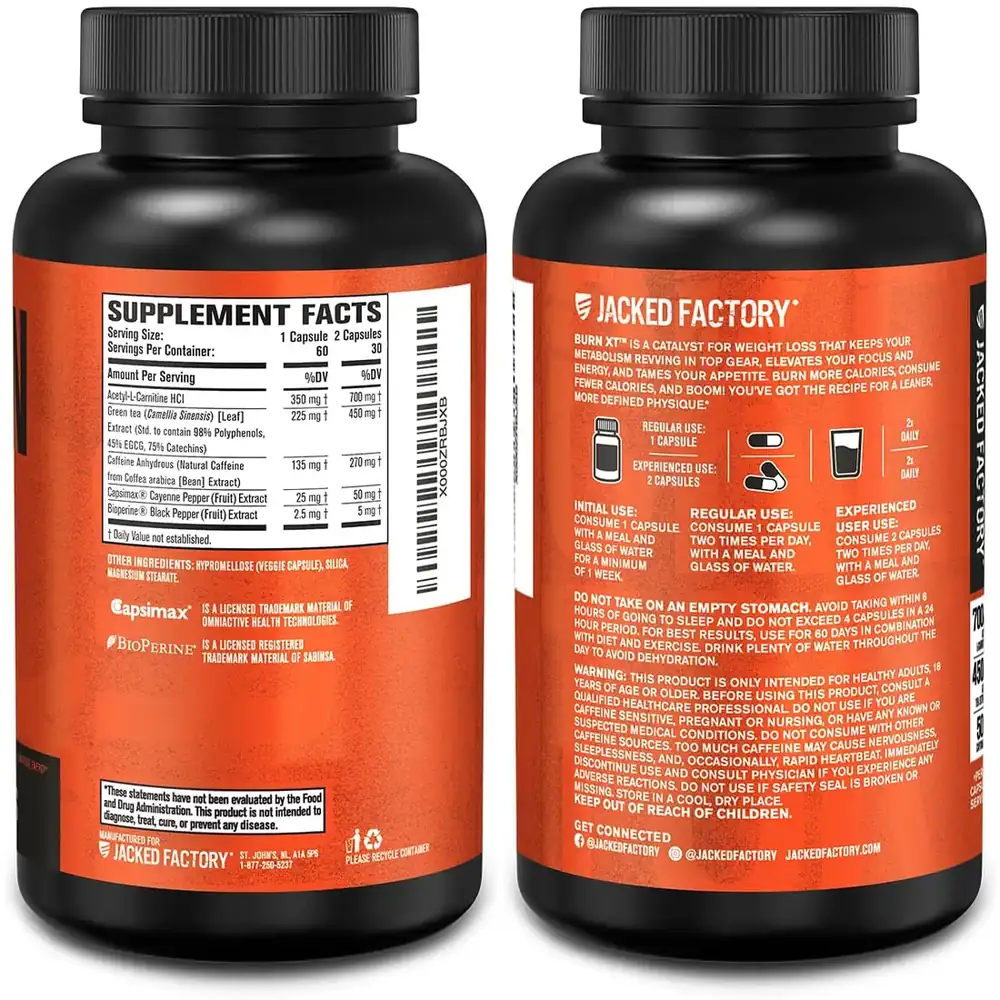
- A two-capsule serving of Burn XT carries 270 mg of caffeine. One capsule carries 135 mg.
- That is roughly two to three mugs of brewed coffee, swallowed in one go rather than sipped over an hour.
- The FDA's general figure for healthy adults is 400 mg a day, so one serving is about two thirds of it before you drink anything.
- The label says not to combine it with other caffeine sources, not to take it within six hours of sleep, and not to exceed four capsules in 24 hours.
- A randomised study found 400 mg taken six hours before bed still cost measurable sleep, and most people did not notice.
A note before you read on. Burn XT is a dietary supplement, not a treatment for anything. Nothing on this page is medical advice and none of it can know what else you take. Each two-capsule serving carries 270 mg of caffeine and 5 mg of piperine, and those two numbers are the ones to carry into a conversation with a pharmacist or a doctor before you start.
Most people buy a thermogenic capsule for what it might do to their appetite and their afternoon. What they actually swallow, in the first hour, is a large dose of caffeine. That is not a criticism. Caffeine is the ingredient in this category with the best evidence behind it by a wide margin. It is simply worth knowing the number, because it is the number that decides whether this product is a sensible thing for you personally to take every morning.
The number is 270 milligrams a serving. It is printed on the panel, it is printed in the hero of this website's home page, and it is the single most useful fact about Burn XT.
What 270 mg actually looks like
Milligram figures are hard to feel. Mugs of coffee are not, so here is the same number in both forms.
| Source | Caffeine | Roughly |
|---|---|---|
| Burn XT, one capsule | 135 mg | One mug of brewed coffee |
| Burn XT, two-capsule serving | 270 mg | Two to three mugs, taken at once |
| Brewed coffee, 12 oz | 95–165 mg | One mug |
| Espresso, single shot | 60–75 mg | Half a mug |
| Black tea, 8 oz | 40–70 mg | A third of a mug |
| Energy drink, 16 oz | 150–200 mg | One and a half mugs |
A capsule also delivers it all at once rather than over the twenty minutes a mug takes, so the peak is higher and the ritual that usually paces caffeine through a day is absent.
Where the number sits on the label
It sits in the third row of the Supplement Facts panel, described as caffeine anhydrous from natural caffeine from Coffea arabica bean extract. Anhydrous means dried: caffeine with the water removed, so it can be weighed accurately into a capsule.
Two details are worth pulling out of that description.
- Natural is not a meaningful distinction here. Caffeine from a coffee bean and caffeine made in a factory are the same molecule. The word describes the sourcing, not the effect.
- It is the only stimulant on this panel. There is no yohimbine, no synephrine and nothing DMAA-adjacent. For a product in this category that is a genuinely good thing, and it means the stimulant question here is entirely a caffeine question.
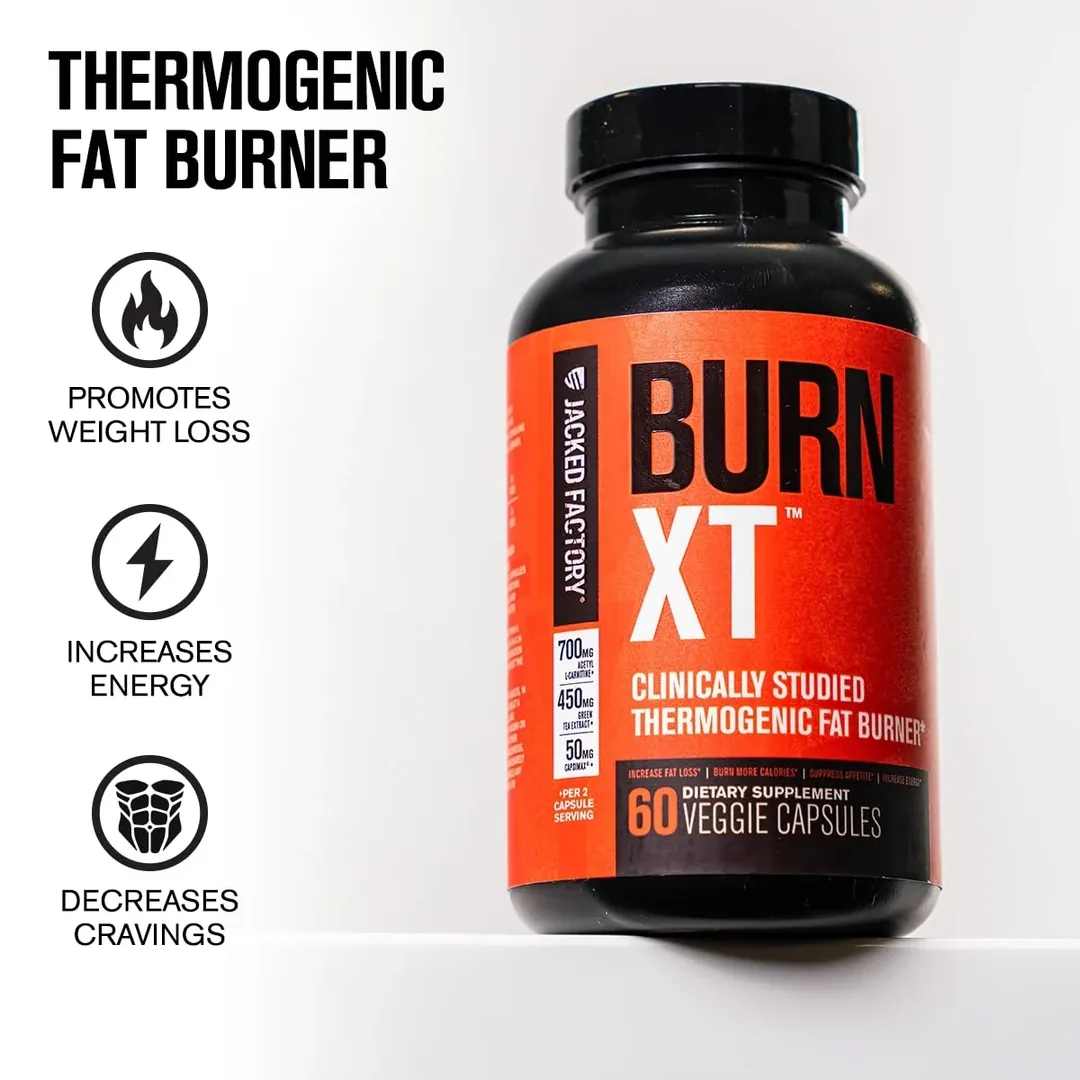
What the label does not do is put the figure on the front. Three amounts are repeated down the side panel of the front label, and caffeine is not one of the three. You have to turn the bottle round. The full transcription is on this website's supplement facts page.
The 400 mg figure, and what it is not
The Food and Drug Administration's consumer guidance names 400 milligrams a day as the amount not generally associated with dangerous negative effects in healthy adults (FDA, Spilling the Beans). It is the figure everyone quotes and it is worth being precise about what it is.
It is a general population figure for healthy adults. It is not a personal threshold, it is not a target, and it says nothing about anyone who is pregnant, who has a heart rhythm problem, who is on medication, or who simply metabolises caffeine slowly. Caffeine clearance varies severalfold between people for genetic reasons, which is why one person can drink an espresso after dinner and another cannot have tea after four.
Against that figure, one serving of this product is 270 milligrams, or about two thirds. The Mayo Clinic's summary of the same territory is worth two minutes (Caffeine: how much is too much?), as is the Harvard Nutrition Source page on what caffeine does and does not do (The Nutrition Source).
The practical reading is arithmetic. Take the full serving and you have room for roughly one ordinary coffee before you reach the general figure. Not three.
The six hours before you sleep
The back label carries a line that most people read as boilerplate: avoid taking it within six hours of going to sleep. It is not boilerplate. It is close to the most evidence-backed sentence on the bottle.
A randomised, double-blind study gave participants 400 milligrams of caffeine at three different times: immediately before bed, three hours before bed, and six hours before bed. Sleep was measured objectively rather than reported. All three timings reduced sleep meaningfully, including the six-hour one, and the participants largely did not perceive the disruption they were measurably experiencing (Drake and colleagues, 2013).
That last clause is the important one. Not noticing is the problem. Somebody taking a thermogenic at two in the afternoon and sleeping badly will usually attribute the bad sleep to stress, or to the day, or to age, and go on taking it at two in the afternoon.
Poor sleep also works against everything this product is sold to help with. It raises appetite and makes the following afternoon harder, which is the afternoon the capsule was supposed to fix.
The caffeine figure, printed where you can see it
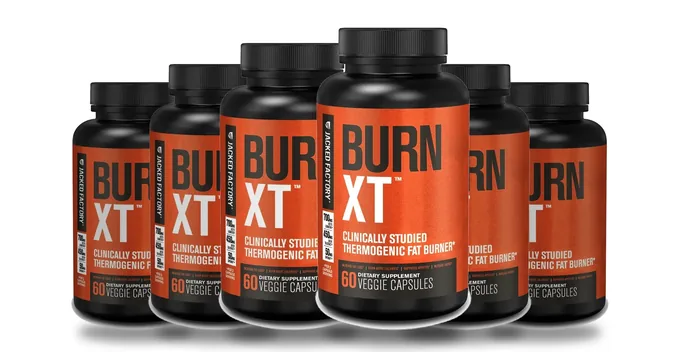
Burn XT prints 135 mg a capsule and 270 mg a serving on the panel, and this desk prints it in the hero of the home page. Sixty days to change your mind.
Price shown at checkout
Order Burn XTWho should not be taking 270 mg at all
The bottle's own warning names four groups and the evidence adds three more. All seven are on this website's who it is for page, and the short version is here.
- Anyone under 18. The printed warning says healthy adults 18 years of age or older, and the sales listing direction says adults 19 years and older.
- Anyone pregnant or nursing. Named explicitly on the bottle.
- Anyone caffeine sensitive. Also named on the bottle. If one strong coffee makes you shaky, 270 milligrams at once will be considerably worse.
- Anyone with a known or suspected medical condition, without asking a qualified healthcare professional first.
- Anyone with raised blood pressure. Caffeine raises blood pressure acutely, and a systematic review found the effect matters most in exactly the group whose pressure is already raised (Mesas and colleagues, 2011).
- Anyone with a heart rhythm problem. A stimulant is the wrong thing to experiment with.
- Anyone already taking a pre-workout, a fat burner or an energy drink. Doses add. Stacking stimulants is how people end up in an emergency department.
An eighth group: anyone on daily prescription medicine who has not asked a pharmacist. Two numbers make that conversation quick, 270 milligrams of caffeine and 5 milligrams of piperine (NCCIH, using dietary supplements wisely).
What changes after two weeks
Caffeine tolerance is real, it develops quickly, and it is uneven. Understanding which parts fade and which do not explains most of what buyers report in the first month.
What fades
The subjective hit. The alert, slightly wired feeling of the first few days settles within one to two weeks as adenosine receptors adapt. People read this as the product stopping working, and it is the commonest reason somebody increases the dose.
What partly fades
The metabolic effect. A meta-analysis of catechin-rich teas with caffeine found the effect on energy expenditure and fat oxidation was real overall and blunted in habitual caffeine consumers (Hursel and colleagues, 2011). If you already drink coffee every morning, part of what this product sells is something you have already spent.
What does not fade
The sleep disruption, and the blood pressure response in people susceptible to it. Those are the two effects people assume they have adapted to and largely have not. It is an unfortunate combination: the pleasant part of caffeine tolerates away and the unhelpful part does not.
The response to a quieter week two is not more capsules. It is to keep the dose identical and wait, which is what the dosing page says.
Fitting it into a day that already has coffee
Most people buying this already drink coffee. Here is what the arithmetic looks like for four common days.
| A day like this | Total caffeine | Against 400 mg |
|---|---|---|
| Two capsules, no coffee | 270 mg | Comfortably inside |
| Two capsules and one mug | 435 mg | Just over |
| Two capsules and two mugs | 600 mg | Half as much again as the figure |
| One capsule and one mug | 300 mg | Inside, with room |
| One capsule and two mugs | 465 mg | Over |
| Two capsules and an energy drink | 450–470 mg | Over, and the label says not to |
There is no version of the full serving plus a normal coffee habit that stays under the general figure. The version that works is to swap rather than add: take the capsules with breakfast and skip the morning coffee entirely.
What to do when it feels like too much
Jitteriness, a racing heart, a tight chest, anxiety, or a night where you lie awake having taken it at lunchtime. All of these are dose-related and all have the same first answer.
- Halve it. One capsule is 135 milligrams and is a perfectly sensible serving. The label's own initial-use direction is one capsule with a meal for the first week, so you are not improvising.
- Move it earlier. Breakfast, not lunch. The six-hour rule is a floor, not a target.
- Remove the other caffeine. All of it, for a week, before concluding anything about the capsule.
- Eat with it. The back label says not to take it on an empty stomach and most of the stomach complaints in this category come from ignoring that.
- Stop, if it persists at one capsule taken at breakfast. That is the answer, and it is what the 60-day money-back window exists for.
Two symptoms are not on that list because they are not a dosing question. Chest pain and palpitations that do not settle need medical advice the same day, not a smaller capsule. The bottle says the same thing in its own words: discontinue use and consult a physician if you experience any adverse reaction.
None of this is an argument against the product. It is an argument for knowing the number. Two hundred and seventy milligrams is a real dose of a substance that happens to be legal, cheap and socially invisible, and a label that prints it honestly is doing something most of this category does not. The plainest outside summary is the MedlinePlus caffeine page.
Sources
- FDA on caffeine. U.S. Food and Drug Administration. Spilling the beans: how much caffeine is too much? https://www.fda.gov/consumers/consumer-updates/spilling-beans-how-much-caffeine-too-much
- Drake 2013. Drake C, Roehrs T, Shambroom J, Roth T. Caffeine effects on sleep taken 0, 3, or 6 hours before going to bed. Journal of Clinical Sleep Medicine. 2013;9(11):1195-1200. PMID 24235903. https://pubmed.ncbi.nlm.nih.gov/24235903/
- Mesas 2011. Mesas AE, Leon-Munoz LM, Rodriguez-Artalejo F, Lopez-Garcia E. The effect of coffee on blood pressure and cardiovascular disease in hypertensive individuals: a systematic review and meta-analysis. American Journal of Clinical Nutrition. 2011;94(4):1113-1126. PMID 21880846. https://pubmed.ncbi.nlm.nih.gov/21880846/
- Hursel 2011. Hursel R, Viechtbauer W, Dulloo AG, et al. The effects of catechin rich teas and caffeine on energy expenditure and fat oxidation: a meta-analysis. Obesity Reviews. 2011;12(7):e573-e581. PMID 21366839. https://pubmed.ncbi.nlm.nih.gov/21366839/
- MedlinePlus caffeine. U.S. National Library of Medicine, MedlinePlus. Caffeine. https://medlineplus.gov/caffeine.html
- Mayo Clinic caffeine. Mayo Clinic. Caffeine: how much is too much? https://www.mayoclinic.org/healthy-lifestyle/nutrition-and-healthy-eating/in-depth/caffeine/art-20045678
- Harvard Nutrition Source. Harvard T.H. Chan School of Public Health, The Nutrition Source. Caffeine. https://nutritionsource.hsph.harvard.edu/caffeine/
- NCCIH on using supplements. National Center for Complementary and Integrative Health. Using dietary supplements wisely. https://www.nccih.nih.gov/health/using-dietary-supplements-wisely

Every page, every journal post, the bottle facts and the ingredients go through review by Dr. Pascale Carbonara, MD before they ship. We write from the printed Burn XT Supplement Facts panel and this desk’s own paperwork, confirm every PubMed identifier against the eutils summary API before publishing it, and print “not published” wherever a figure is not disclosed. This desk sells the product it writes about and says so on every page that touches money. Corrections go to [email protected] and move the review date forward. Last updated 17 September 2026.