Burn XT Official Website › Ingredients
Burn XT Ingredients: The Five Actives and Their Amounts
Burn XT has five named actives, and every amount is printed with no proprietary blend.
Per 2-capsule serving: acetyl L-carnitine 700 mg, green tea extract 450 mg (45 percent EGCG), caffeine anhydrous 270 mg, Capsimax 50 mg and BioPerine 5 mg.
To see both columns, read the full panel.
Each ingredient below carries what it is, what the trials found, and the part that does not flatter it. In that order, every time.
The Burn XT panel, before anything else
The panel is the source for every figure on this page. Where a number is not on it, this page says so rather than estimating.
| Ingredient | Per capsule | Per 2-capsule serving | % Daily Value |
|---|---|---|---|
| Acetyl-L-Carnitine HCl | 350 mg | 700 mg | Not established |
| Green tea leaf extract Camellia sinensis, standardised to 98% polyphenols, 45% EGCG, 75% catechins | 225 mg | 450 mg | Not established |
| Caffeine anhydrous natural caffeine from Coffea arabica bean extract | 135 mg | 270 mg | Not established |
| Capsimax cayenne pepper fruit extract Capsicum annuum | 25 mg | 50 mg | Not established |
| BioPerine black pepper fruit extract Piper nigrum | 2.5 mg | 5 mg | Not established |
Other ingredients: Hypromellose (vegetable capsule), silica, magnesium stearate. Capsimax is a licensed trademark material of OmniActive Health Technologies. BioPerine is a licensed registered trademark material of Sabinsa. Both marks are printed on the panel.
Two columns, and the marketing quotes the right-hand one. Every headline figure you have seen for this product is the two-capsule number. If you take a single capsule you are getting exactly half of each. The panel is honest about this; the artwork around it is quieter.
Every Burn XT ingredient, with its evidence
Acetyl-L-Carnitine HCl
700 mg per 2-capsule serving the acetylated form of L-carnitineCarnitine is a compound the body already makes from lysine and methionine, and it also arrives in the diet, mostly from red meat. Its job inside a cell is transport: it carries long-chain fatty acids across the mitochondrial membrane so they can be used for fuel. The acetylated form crosses into the brain more readily than plain L-carnitine, which is why it turns up in focus products as often as in gym products.
This is the largest amount on the panel and the one with the most trial data behind it, though not the most flattering. A meta-analysis of 37 randomised trials found L-carnitine supplementation produced a small average reduction in body weight and body-mass index, with the effect shrinking as trial duration grew. An earlier meta-analysis reached the same shape of conclusion: statistically detectable, clinically modest. Most of those trials used 1,500 to 3,000 mg a day, which is two to four times what this panel prints.
Two honest points. The trials were mostly in people with obesity or a metabolic condition, and the NIH fact sheet is blunt that healthy people with normal carnitine status have little to gain from more of it. And 700 mg is below the amounts used in almost every trial that reported an effect.
Sources: Talenezhad 2020 · Pooyandjoo 2016 · NIH ODS carnitine
Green tea leaf extract
450 mg per 2-capsule serving, standardised to 45% EGCG Camellia sinensisGreen tea extract concentrates the catechins from the leaf. This panel prints the standardisation, which many labels do not: 98 percent polyphenols, 45 percent EGCG and 75 percent catechins. At 450 mg that works out to roughly 200 mg of EGCG and about 340 mg of total catechins a serving, which is a genuinely useful number to be given.
Catechins plus caffeine is the best-evidenced pairing on this label. A 1999 crossover study found a green tea extract supplying 90 mg EGCG with 50 mg caffeine raised 24-hour energy expenditure by about 4 percent, and that the same dose of caffeine alone did not. A meta-analysis of catechin-rich teas later found a significant increase in energy expenditure and fat oxidation, with the effect blunted in habitual caffeine consumers. A Cochrane review of green tea preparations for weight loss found the effect on body weight small and not clinically important.
A 4 percent shift in 24-hour energy expenditure is real and it is small: on a 2,200 calorie day it is about 90 calories, which a single snack erases. And the Cochrane reading matters more than the mechanism study, because it asked the question a buyer is actually asking.
Sources: Dulloo 1999 · Hursel 2011 · Jurgens 2012 (Cochrane) · Berube-Parent 2005 · NCCIH green tea
Caffeine anhydrous
270 mg per 2-capsule serving natural caffeine from Coffea arabica bean extractAnhydrous simply means dried: it is caffeine with the water removed, so it can be weighed accurately into a capsule. The panel prints 135 mg a capsule and 270 mg for the two-capsule serving. For scale, a 12-ounce mug of brewed coffee is usually 95 to 165 mg, so the full serving is roughly two to three mugs taken in one swallow.
Caffeine is the ingredient on this label with the least doubt attached to it. It reliably raises alertness, it reliably raises resting energy expenditure for a few hours, and it reliably suppresses appetite a little. A 24-hour chamber study of a thermogenic beverage measured the effect on whole-day energy metabolism rather than on a single afternoon, which is the honest way to measure it.
The FDA's consumer guidance puts 400 mg a day as the amount not generally associated with negative effects in healthy adults. One full serving of this product is 270 mg of that, before any coffee. The back label says plainly: do not consume with other caffeine sources, do not exceed four capsules in 24 hours, and avoid taking it within six hours of sleep. A randomised study of 400 mg caffeine taken six hours before bed still measured a meaningful loss of sleep, so that six-hour line is not decoration.
Sources: FDA on caffeine · Drake 2013 · Mesas 2011 · Rudelle 2007 · MedlinePlus caffeine
Capsimax cayenne pepper fruit extract
50 mg per 2-capsule serving Capsicum annuumCapsimax is a branded, coated capsicum extract. The coating is the point: raw capsaicinoids at a dose high enough to do anything are hard on the stomach, and the beadlet delivery is designed to release them further down. The panel prints the branded name and the total extract weight, but not the capsaicinoid content, so the active load cannot be checked from the label.
A systematic review and meta-analysis of capsaicinoids and capsinoids found a measurable increase in energy expenditure in healthy adults, and a second meta-analysis of human studies reached a similar conclusion for body composition endpoints over time. Both describe small effects.
Two milligrams of capsaicinoids is a common effective dose in that literature, and this label prints 50 mg of extract with no capsaicinoid figure beside it. A branded ingredient with an undisclosed active fraction is not the same as a disclosed dose, and nobody reading this label can compare it to the trials.
Sources: Irandoost 2021 · Zsiboras 2018
BioPerine black pepper fruit extract
5 mg per 2-capsule serving Piper nigrumBioPerine is a standardised piperine extract, and it is in this formula as a helper rather than an active. Piperine slows some of the liver and gut enzymes that clear other compounds, so whatever it is taken with tends to stay in the blood longer.
The reference study is from 1998: 20 mg of piperine raised the bioavailability of curcumin in human volunteers by a very large margin. That result is real, it is old, and it is about curcumin, not about anything else on this panel.
Two things follow, and the second one matters more. Five milligrams is a quarter of the amount in that study. And the same enzyme effect applies to medicines: piperine can raise blood levels of drugs cleared by the same pathways, so this is a real reason to talk to a pharmacist rather than a detail to skim.
Sources: Shoba 1998 · NCCIH on using supplements
How the Burn XT amounts compare to the research
| Ingredient | On this panel | Typical research amount | Verdict |
|---|---|---|---|
| Acetyl L-carnitine | 700 mg | 1,500–3,000 mg a day | Below. Roughly a quarter to a half. |
| Green tea extract | 450 mg, about 200 mg EGCG | 270–1,200 mg extract; 90–300 mg EGCG | Inside the range, at the lower-middle of it. |
| Caffeine anhydrous | 270 mg | 100–400 mg acute | Squarely inside. The one amount nobody can call underdosed. |
| Capsaicinoids | 50 mg extract, fraction not printed | 2–12 mg capsaicinoids | Cannot be judged. The active fraction is not on the label. |
| Piperine | 5 mg | 20 mg in the reference study | A quarter of it, and for a different compound. |
Sources for each row are on the ingredient card above it and in the reference list at the foot of this page.
Why print this at all. Because a buyer can find it in twenty minutes and we would rather they found it here. Two of these five rows are unflattering and one cannot be judged from the label. That is a fair summary of a mid-priced thermogenic, and it is more useful than an adjective.
What is not in Burn XT
- ›No proprietary blend, and no undisclosed totals anywhere on the panel.
- ›No yohimbine, no synephrine and no DMAA. The stimulant on this label is caffeine and nothing else.
- ›No gelatin. The shell is hypromellose, so the capsule suits vegetarians.
- ›No sugar, no sweetener, no sugar alcohol and no flavouring. It is a capsule.
- ›No garcinia, no raspberry ketone and no forskolin, the three ingredients this category reaches for when it wants a headline without evidence.
- ›No published capsaicinoid figure for the Capsimax row, which is the one real omission on an otherwise transparent panel.
Absence is hard to prove from a photograph, which is why it gets its own section. Every line above is read off the printed panel and the other-ingredients line beneath it, both of which are reproduced on the supplement facts page.
Burn XT ingredients that interact with medication
| Ingredient | What it does | Ask about |
|---|---|---|
| Caffeine, 270 mg | Raises blood pressure acutely and stimulates the heart | Blood pressure medicine, heart rhythm medicine, thyroid medicine, antidepressants, anything else containing caffeine |
| Piperine, 5 mg | Slows some liver and gut enzymes, so co-taken drugs clear more slowly | Anything taken daily, particularly narrow-margin medicines |
| Green tea extract, 450 mg | Contains vitamin K and catechins; concentrated extracts carry a rare liver signal | Warfarin and other anticoagulants, and any existing liver condition |
| Acetyl L-carnitine, 700 mg | Generally well tolerated; thyroid interaction reported | Thyroid hormone replacement, seizure medicine |
This is a prompt for a conversation, not a substitute for one. The side effects page carries the fuller version.
Start the conversation with the caffeine figure rather than the brand name. A pharmacist can answer “270 milligrams of caffeine with 5 milligrams of piperine, every morning” immediately. A brand name means nothing to them (NCCIH guidance on using supplements wisely).
How to read a label like the Burn XT panel
Find the serving size first
Not the ingredient list. The serving size and servings-per-container decide what every other number on the panel means. Here it is one capsule or two, and sixty capsules in the bottle.
Check for a blend line
A single weight covering several names is a proprietary blend, and it means no individual amount can be checked. This panel has none, which is the strongest single thing on it.
Look for a standardisation
An extract with no standardisation figure could be almost anything. This one prints 98 percent polyphenols, 45 percent EGCG and 75 percent catechins, so the active content can be worked out.
The longer version of this, written for any label rather than this one, is in the thermogenic supplement guide, and the nine-point checklist that scores this product against its own standard is in choosing a thermogenic supplement.
Burn XT ingredient questions
How many ingredients does Burn XT have?
Five actives, plus three excipients. The actives are acetyl L-carnitine, green tea leaf extract, caffeine anhydrous, Capsimax cayenne pepper extract and BioPerine black pepper extract. The excipients are the hypromellose capsule shell, silica and magnesium stearate.
Is there a proprietary blend in Burn XT?
No. Every active is printed on its own line with its own amount, in two columns. That is unusual enough in this category to be worth stating plainly.
How much EGCG is in a serving?
The panel prints 450 mg of green tea extract standardised to 45 percent EGCG, which works out to roughly 200 mg of EGCG a serving. The panel does not print that arithmetic; it prints the inputs, which is better.
Which ingredient has the weakest evidence at this amount?
The BioPerine, at 5 mg. The study people cite for piperine used 20 mg and measured curcumin absorption, not absorption of anything on this panel. It is a helper with a plausible mechanism and no direct evidence here.
Which has the strongest?
The caffeine, easily, followed by the green tea extract in combination with it. Neither of those is a weight claim; they are claims about alertness and about energy expenditure over a day.
Does it contain green coffee bean extract?
No. The caffeine is described on the panel as natural caffeine from Coffea arabica bean extract, which is the source of the caffeine rather than a separate green coffee ingredient with its own chlorogenic acid claim.
How this Burn XT ingredient page is written
This desk publishes what the printed panel says and marks the gaps. The four claims below are the ones a sceptical reader can audit, which is the only reason to make them:
- The panel is the source. Figures come from the Supplement Facts panel photographed on the bottle, not from the manufacturer's marketing artwork. Where the two disagree, the panel is published and the disagreement is named on the page.
- Not published stays not published. Nothing undisclosed is estimated here. Pack prices are set at checkout, so no price is printed anywhere on this website.
- Sources are real and linked in the sentence. Every study cited was confirmed against its PubMed record first, and each appears beside the amount it used.
- Corrections change the date. Write to [email protected] and the review date moves forward.
We earn when you buy. Burnxts is the authorized United States retail desk for this product and this website makes money on orders placed through it. That is exactly why the caffeine figure is in the hero, why the research-dose table is on the ingredients page, and why the three-star reviews are published at the same size as the five-star ones. They are where our interest and yours pull apart, and you should be able to watch us choose.
On this page specifically: every amount is transcribed from the photographed panel rather than from the listing artwork, and every research amount in the comparison table comes from the cited paper's own methods section.
Every page, every journal post, the bottle facts and the ingredients go through review by Dr. Pascale Carbonara, MD before they ship. We write these pages from the printed Burn XT Supplement Facts panel and this desk’s own paperwork, cite public research for acetyl L-carnitine, green tea catechins, caffeine, capsaicinoids and piperine beside the amounts that research actually used, and print “not published” wherever a figure is not disclosed rather than estimating it. Where the manufacturer’s artwork claims more than the panel supports, we say so on the page. This desk has no named clinical reviewer and does not pretend to. Corrections are made on the page itself and the review date moves forward. Write to [email protected]. Last reviewed September 2026.
Sources for the Burn XT ingredient panel
- Talenezhad 2020. Talenezhad N, Mohammadi M, Ramezani-Jolfaie N, et al. Effects of l-carnitine supplementation on weight loss and body composition: a systematic review and meta-analysis of 37 randomized controlled clinical trials with dose-response analysis. Clinical Nutrition ESPEN. 2020;37:9-23. PMID 32359762. https://pubmed.ncbi.nlm.nih.gov/32359762/
- Pooyandjoo 2016. Pooyandjoo M, Nouhi M, Shab-Bidar S, Djafarian K, Olyaeemanesh A. The effect of (L-)carnitine on weight loss in adults: a systematic review and meta-analysis of randomized controlled trials. Obesity Reviews. 2016;17(10):970-976. PMID 27335245. https://pubmed.ncbi.nlm.nih.gov/27335245/
- NIH ODS carnitine. National Institutes of Health, Office of Dietary Supplements. Carnitine: fact sheet for health professionals. https://ods.od.nih.gov/factsheets/Carnitine-HealthProfessional/
- Dulloo 1999. Dulloo AG, Duret C, Rohrer D, et al. Efficacy of a green tea extract rich in catechin polyphenols and caffeine in increasing 24-h energy expenditure and fat oxidation in humans. American Journal of Clinical Nutrition. 1999;70(6):1040-1045. PMID 10584049. https://pubmed.ncbi.nlm.nih.gov/10584049/
- Hursel 2011. Hursel R, Viechtbauer W, Dulloo AG, et al. The effects of catechin rich teas and caffeine on energy expenditure and fat oxidation: a meta-analysis. Obesity Reviews. 2011;12(7):e573-e581. PMID 21366839. https://pubmed.ncbi.nlm.nih.gov/21366839/
- Jurgens 2012 (Cochrane). Jurgens TM, Whelan AM, Killian L, Doucette S, Kirk S, Foy E. Green tea for weight loss and weight maintenance in overweight or obese adults. Cochrane Database of Systematic Reviews. 2012;(12):CD008650. PMID 23235664. https://pubmed.ncbi.nlm.nih.gov/23235664/
- Berube-Parent 2005. Berube-Parent S, Pelletier C, Dore J, Tremblay A. Effects of encapsulated green tea and Guarana extracts containing a mixture of epigallocatechin-3-gallate and caffeine on 24 h energy expenditure and fat oxidation in men. British Journal of Nutrition. 2005;94(3):432-436. PMID 16176615. https://pubmed.ncbi.nlm.nih.gov/16176615/
- Oketch-Rabah 2020 (USP). Oketch-Rabah HA, Roe AL, Rider CV, et al. United States Pharmacopeia (USP) comprehensive review of the hepatotoxicity of green tea extracts. Toxicology Reports. 2020;7:386-402. PMID 32140423. https://pubmed.ncbi.nlm.nih.gov/32140423/
- NCCIH green tea. National Center for Complementary and Integrative Health. Green tea: usefulness and safety. https://www.nccih.nih.gov/health/green-tea
- FDA on caffeine. U.S. Food and Drug Administration. Spilling the beans: how much caffeine is too much? https://www.fda.gov/consumers/consumer-updates/spilling-beans-how-much-caffeine-too-much
- Drake 2013. Drake C, Roehrs T, Shambroom J, Roth T. Caffeine effects on sleep taken 0, 3, or 6 hours before going to bed. Journal of Clinical Sleep Medicine. 2013;9(11):1195-1200. PMID 24235903. https://pubmed.ncbi.nlm.nih.gov/24235903/
- Irandoost 2021. Irandoost P, Lotfi Yagin N, Namazi N, et al. The effect of capsaicinoids or capsinoids in red pepper on thermogenesis in healthy adults: a systematic review and meta-analysis. Phytotherapy Research. 2021;35(3):1358-1377. PMID 33063385. https://pubmed.ncbi.nlm.nih.gov/33063385/
- Zsiboras 2018. Zsiboras C, Matics R, Hegyi P, et al. Capsaicin and capsiate could be appropriate agents for treatment of obesity: a meta-analysis of human studies. Critical Reviews in Food Science and Nutrition. 2018;58(9):1419-1427. PMID 28001433. https://pubmed.ncbi.nlm.nih.gov/28001433/
- Shoba 1998. Shoba G, Joy D, Joseph T, Majeed M, Rajendran R, Srinivas PS. Influence of piperine on the pharmacokinetics of curcumin in animals and human volunteers. Planta Medica. 1998;64(4):353-356. PMID 9619120. https://pubmed.ncbi.nlm.nih.gov/9619120/
- NCCIH on using supplements. National Center for Complementary and Integrative Health. Using dietary supplements wisely. https://www.nccih.nih.gov/health/using-dietary-supplements-wisely
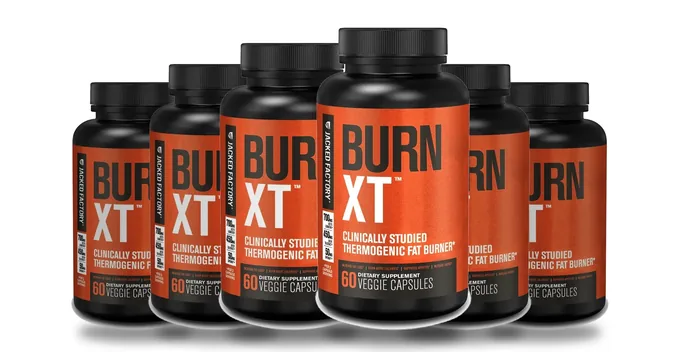
The Burn XT panel, in a bottle
Five actives, every amount printed twice, and a 60-day window in which to decide it was not for you. Orders run through this website.
Price shown at checkout · 60-day money-back window
Order Burn XT On The Official WebsiteOne-time payment, no subscription · 60-day money-back window · lot BUR-26/BU-6491 · order desk +1 (520) 206-1597